
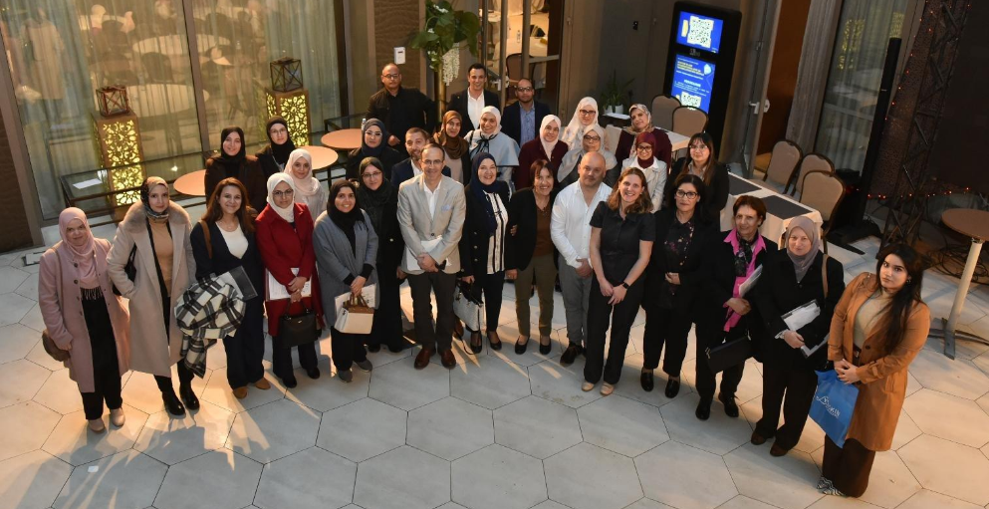
Over the past year and a half, the Algerian Society of Immunology (SAI), a member society of the Federation of African Immunological Societies (FAIS), has run four major events that trace a clear arc: from strengthening everyday diagnostic practice, through advanced technical training in flow cytometry, to a landmark push for national transplant infrastructure and a congress held under the patronage of Algeria’s Minister of Health.
5th Continuing Medical Education Day
SAI’s programme opened in February 2025 with its 5th Continuing Medical Education Day, held at the Hyatt Regency in Algiers under the theme “immunological testing: between public and private sectors.”
The day brought clinicians and laboratory specialists from both sectors together across three sessions: diagnostic pathways for monoclonal gammopathies, allergic disease (including specific IgE testing and food allergy), and autoimmune conditions, closing with a session on diagnosing coeliac disease and interpreting ANA HEp-2 results. Each session ended with a round-table aimed at practical recommendations rather than theory alone, reflecting SAI’s recurring focus on what actually changes at the bench.
3rd Algerian Workshop on Flow Cytometry
In June 2025, SAI turned to advanced technical training, hosting the 3rd Algerian Workshop on Flow Cytometry in partnership with the IFCC Working Group on Flow Cytometry and industry partners including Beckman Coulter and BD. Over four days, an international faculty, among them Claude Lambert (IFCC WG-FC), Alberto Orfao (EuroFlow) and Evangelos Ntrivalas, led participants from instrumentation basics through to multicolour panel design, compensation, and hands-on data analysis on Kaluza, FlowJo and Infinicyt. The later sessions moved into immunophenotyping for leukaemia and lymphoma diagnosis, minimal residual disease monitoring, and the EuroFlow approach to diagnosing inborn errors of immunity, positioning the workshop as much a skills-transfer exercise as a training course.
Master Class on Living Donor Transplantation
This April 2026, SAI hosted a Master Class on Living Donor Transplantation in Algiers, bringing ethics, HLA laboratory practice and clinical decision-making into direct conversation. International faculty from the HLA laboratories of Nancy and Toulouse joined Algerian colleagues to work through real diagnostic pitfalls, including cases where standard antibody screening misjudged a patient’s risk profile until epitope-level (eplet) analysis corrected it, and a case where a patient’s own medication produced a false-positive cross-match result.
The masterclass’s teaching booklet closed with a memorandum to Algeria’s health authorities and its National Transplant Agency. Its president, Pr M. Bouali-Benhalima, framed the moment as a shift from a macroscopic immunology to one of genuine precision, in which understanding antibody reactivity at the molecular level is already changing which patients can safely be transplanted. The booklet sets out three priorities: networking Algeria’s HLA laboratories to a shared standard, developing a calculated panel reactive antibody (cPRA) tool built on Algerian rather than imported allele frequencies, and deploying two national digital platforms, one for the deceased-donor waiting list and one to coordinate paired (crossover) living donation. SAI describes optimising living donation as an immediate necessity, alongside a longer-term commitment to expanding deceased-donor transplantation.
14th National Congress of Immunology
Most recently, SAI held its 14th National Congress of Immunology on 8–9 July 2026 at the Hôtel El-Aurassi in Algiers, under the patronage of Algeria’s Minister of Health and with the support of the National Health Security Agency (ANSS). Opening with a tribute to the late Pr M.C. Abbadi, the two-day programme covered a wide clinical span: the JAK/STAT pathway in immune-mediated disease, adverse effects of biotherapies, HPV vaccination, immunosenescence and vaccine response, and a retrospective study of humoral rejection across 250 kidney transplant recipients.
Free and oral communications ran throughout, alongside e-posters, and the congress closed its second day with three hands-on workshops on diagnosing autoimmune liver disease, evaluating ANA and dsDNA testing, and case-control study design for participants building their own research.
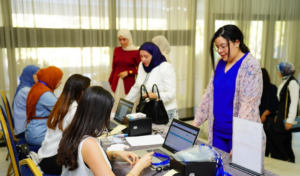
Congratulations SAI
These four events show a society working simultaneously on several fronts: routine diagnostic quality, advanced technical skill, and the harder, slower work of building national infrastructure and locally grounded reference data.
For FAIS and its member societies elsewhere on the continent, SAI’s push for an Algeria-specific cPRA calculator, in particular, is a useful case study in why imported reference data can misrepresent local patient risk, and what it takes to build the alternative.